Showing posts with label millionaire. Show all posts

Tuesday, November 2, 2010

360 Millionaire - Last Chance


Why you should be beating down the doors to attend the 360 Millionaire Class with JT Foxx and what you will learn there!

Because JT Foxx continually updates his materials to work in the current market, the exact details of what he teaches in one class are not the same in the next class. So even though I have attended his class before, the list of learnings I give here is partial, generally accurate, and probably won’t be covered in exactly the same way as it was when I heard him teach it before.

Last year, JT called this class, “Partner Your Way to Millions” and it was a great class. Since then he has renamed it, retooled it, and completely updated it to be even more effective.

Why would anyone want to attend a class about millionaires? Very simply because we all want to be financially independent. Some of us want to be stinking rich.

Robert Kiyosaki (a friend of JT’s) in his book, “Rich Dad Poor Dad” teaches that financial independence is when you have income sources outside of your job that meet or exceed your ordinary expenses. For many of us financial independence is enough. Others want still more.

Many of us who were raised working-class, like I was, have been taught to look down on people of wealth as some form of leech on society (some politicians try to manipulate us with this ploy today). This is a way for us to make our relative poverty into a virtue and their wealth into a vice that we aren’t afflicted with. This is really just a mental coping mechanism, an excuse to help us to avoid feeling bad that we haven’t been good enough with our talents to lift ourselves to that level. Jesus taught in his parable of the talents that we should be very aggressive in turning our 5 into 10 and our 10 into 100. And yet, we sneer at those who turn 10 into 100. My mother taught me that this is what is called, “reverse snobbery.” It is actually a form of pride and envy. Did you realize that even us poor folk can be guilty of the kind of pride and envy we imagine is in the heart of the wealthy.

A wise man taught me that being wealthy won’t make you a good person or bad, it will just make you more of what you already are. If you are a jerk, you will be a bigger jerk. If you are nice, you will be even nicer to people. Wealthy people give more to charities that poor people, because they can and they want to. A little while ago I spent a weekend with a man who is worth $300 million. He doesn’t need to work another day in his life. He was paid to be there with a group of us and teach us his secrets of negotiating. Every dollar he received for being there was contributed to his favorite charity – a children’s hospital. How would you like to be able to give $30,000 to your favorite charity? You can’t when you need that money just to pay your bills. But if you are financially independent and wealthy you can do that, if you choose. Financial independence is about having the ability to choose what to do with your time and your money.

Do you want to spend your whole life depending on how much your boss likes you so that you can improve your financial security? Most of us dream of the day when we can sing along with Johnny Paycheck and say to our boss, “take this job and shove it. I ain’t workin’ here no more.”

In our society today we equate the term millionaire with someone who doesn’t have to depend upon their job anymore. If you become a millionaire, you can join those who have gone before you to tell their boss to “take this job and shove it.”

But are we willing to do anything to make that day happen? What is keeping you from making that happen? If you are like I used to be, there are several things (fears) holding you back. For years these prevented me from even trying to be too successful:

  • I am afraid that I will have to give up what is most important to me in order to attain financial independence. The stories of wrecked lives on the path to wealth are many and legendary. It is true that the enemy of our happiness wants us to give up the sources of true happiness in exchange for worldly wealth or fame. But, that is a false bargain. There is no reason you cannot be financially independent while not sacrificing the most important things in life.
The trap of trading what is important for the mundane is even more prevalent when you are depending upon the pleasure of your boss for your financial well being. How many opportunities to do what you know is important have you missed because you couldn’t afford to take time off from work?

Many years ago I realized the danger of the lure of corporate success. I decided then that I wasn’t going to accept the notion that others pushed at me that the only way I could succeed in the company was to give my life to the company while sacrificing everything else that was important to me. I decided that when I retired from a successful corporate career, I wanted to go home to my first wife and children, not to an empty home or one filled with reminders of failed relationships that had been destroyed in my quest for financial success in my career.

In 2008 I retired from a job paying me six figures per year. I went home to my first wife and children. My successful career did not cost me my marriage and my family. If I had learned many years ago what JT Foxx teaches today, I could have succeeded in my career much quicker and I could have retired to become my own boss much sooner, all without sacrificing the most important things in life.

  • I don’t know what I need to do to become financially independent. Some once told me, “if you think education is expensive, try ignorance and experience and see how much more expensive they are.” That is really true. I have paid the price in ignorance and experience on some things and paid for education on others. I can authoritatively say that education, no matter the cost is much less expensive than the alternatives. Education gives us a chance to become wise by learning from the ignorance and experience of others.

Even when we really want to become financially independent, most of us have no idea how to make that come to pass. I did it in 2008. I met JT after then and he taught me things that have helped further my dream. If I had known years ago what he is teaching today, I could have made my exit from being under someone else’s thumb years ago.

What You Will Learn from the 360 Millionaire?

The truth is that what you learn is a function of what you are open to learn and what is taught. Because I don’t know how open your mind is to receive the knowledge you need to change your life for the better, I cannot tell you what you will learn in this class with JT. But, I can tell you some of what he will teach if you are able to learn it.

A fundamental truth that JT teaches in all his classes is that the key to building your net worth is your network. Building your business or advancing your career is tied to your ability to build and utilize a network of strong relationships with people who become willing to help you achieve your goals. Your network is equal to your net worth.

Some of what you will learn in the 360 Millionaire Class with JT Foxx
  • How to build your network
Effective ways to network
How to find millionaires in your community
How to build relationships with millionaires
How to monetize your network
  • The model JT used and still uses to get the funding he needed to start his business
Step by step how to apply this model to fund your own business
Keys to maintaining this model indefinitely
  • Secrets of branding
How to tell someone about your brand in under a minute
How to get them to ask you for more information
  • Secrets of marketing
How to get your brand in front of people
How to bring people to your business
How to monetize your marketing
How to become The Expert without being branded a “know-it-all”
  • How to manage your image
  • Secrets of successful businesses
Key functions you need to create or have in place
Key information that will make or break your business

This short list just scratches the surface. There is a lot more he will teach in the two days of this class.

This Really Is Your Last Chance

JT has announced that although the class will be held in 2011, he will no longer be personally teaching this class. Yes, you will still be able to get some wonderful instruction, but you won’t be getting it directly from someone who is widely recognized as a marketing genius.

If you are a friend of mine and want to attend the class being held in Charlotte on this December 4th and 5th you need to get in contact with me right away.

Tom ~

PS: You can enroll for the class by going to www.360millionaireclass.com If you are a friend of mine, send me an email letting me know you have enrolled in the class in Charlotte and I will give you a special promotion code that will give you a significant discount off the $5,000 fee that is regularly charged for this class.  My email is at the bottom of this blog.  But you must act fast, seating is filling up quickly and when the seats are gone the discount will be irrelevant.

If you are sick and tired of seeing your investments go into retirement long before you do,

call us today for the cure.
704-699-6080

Or

Leave a message for us 24 hours a day at 704-900-1488
We will call you back within one business day.


Why Buy Retail?


See my latest video about what we do at The Gold Seal Homes Group: http://www.youtube.com/watch?v=ACJx3wpKezQ


About J.T. Foxx
J.T. Foxx started investing 6 years ago with nothing more than a rusted out Ford pick-up truck, $974 dollars and the clothes on his back. Now just four 6 years later, he has closed over $40 million in real estate deals, become an internationally recognized speaker and developed a multitude of successful business ventures - all by mastering the Art of partnering, branding & marketing.

J.T. is most recognized as a very successful real estate investor and entrepreneur but he is also a popular nationally syndicated weekend radio personality of the "J.T. Foxx Show" and the "Canadian Wealth Show". His radio program features such celebrity guests as Senator McCain, Secretary of State, William Cohen, Rev Jesse Jackson, Trump, and George Ross (Donald Trump's right hand man), and celebrated authors like Robert Kiyosaki, author of Rich Dad, Poor Dad and Bob Proctor, from The Secret and Mark Victor Hanson from the Chicken Soup for the Soul series.

Even though his recognition and success in business and radio continues to rise, J.T.'s true passion is teaching and reaching out to those who dream of achieving their goals by creating differentiation and thinking differently. J.T. teaches the same practical applications he utilizes daily and that actually get results in today's rapidly changing marketplace, bottom line his techniques work.

J.T. is beloved by his audiences for his results oriented, no-nonsense approach to business and to life - but most importantly because he gives them the tools not only to make more money, but to thrive and make a powerful impact for the better.

Tel: 1-877-272-3031
events@jtfoxxorg.com
http://www.askjtfoxx.com


About Thomas K Sheppard
Tom started investing about nine years ago with no money and no credit. Learning avidly from established experts, following their instructions and working part-time he was soon able to build a real estate business with more than a $1 million in assets.

Two years ago Tom retired from a six-figure salary with a major national bank to work at his real estate business full time (www.adbproperties.com). Since then he has founded The Gold Seal Homes Group which has the goal of helping 100,000 people attain peace of mind by finding quality, affordable homes. In the current market, the primary thrust of the Group is to help people buy homes at below market prices(www.buybelowmarket.com).

Tom can be reached at: 704-699-6080 or tsheppard@adbproperties.com

Monday, October 25, 2010

You Can't Make Money in Real Estate in THIS Market... WHATEVER!


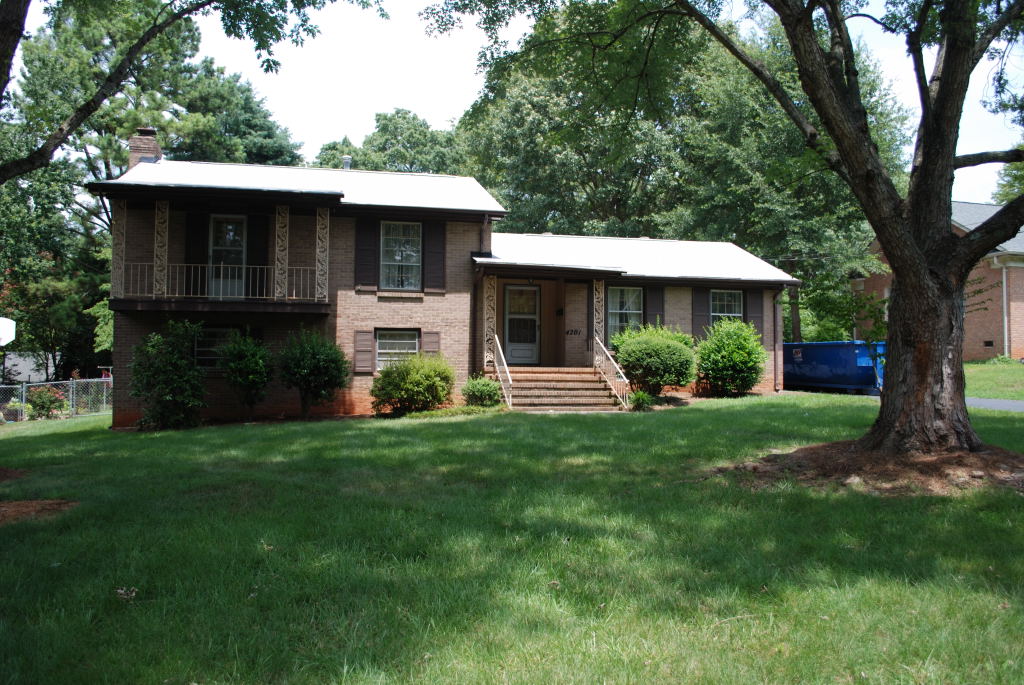
Here is the true story of how one of my partners and I recently made more than $23,000 in just 10 weeks. And, how one fortunate home buyer was able to buy a home at 30% below market.


My partner put up the money and I did all the work. Then we shared a 77% (annualized) return.

My partner and I bought this home in a good neighborhood in South Charlotte in late July for $140,000. Just ten weeks later we sold this same house for $181,497.

In the interim, we put on a new roof, cleaned the place up, made a few repairs, and got bids for upgrading the kitchen. After spending about $5,000, we sold the property for $181,497.

My partner didn’t have to attend any of the closings. I was there when we bought it on July 28, 2010, he was in California. I was at the closing on October 15, 2010 when we sold it. He was back in California after just returning from Australia and New Zealand.

He didn’t have to pound any nails or take time off from his busy schedule to manage the property or the work. I made all the arrangements and wired him the funds at closing.

After taking out all our costs (including real estate agent commissions) we had just over $23,000 to split between us. That was a 16% cash-on-cash return in just 10 weeks. If you annualize that it is an annual return rate of 77.22%.

How would you like to earn 77% a year on your money?
I meet people every day who, when I tell them that I buy and sell real estate, they tell me that, “You cannot make money in today’s market buying and selling real estate.” I tell them, “Don’t tell that to the guy who partnered with me on this house. He will call you a liar.”
Many people believe that if you make money it is because someone else got ripped off. I don’t work that way, but how about if I give you the facts and let you decide.

How did we get such a great deal when we bought the house?

I won’t kid you, finding really great deals in this market is not easy. There are a lot of houses offered for sale, but not many that are really on sale.
We bought the house from an estate. The heirs had left the house sitting for months and they didn’t want it. They were happy to get an ALL CASH offer that didn’t depend on a bank loan (which is pretty hard to get on a house that needs repairs). When we closed, they took their money and ran away, happy.
When they left, the house was filled with stuff that we had to remove before we could go forward. Also, the roof was in danger of collapsing, so we had to get a crew in there fast to fix the roof. Instead of just slapping on a few shingles, we took it down to the wood, replaced several sheets of plywood and then put on 30 year architectural shingles. Boy, were the neighbors happy to see that!
Did the Buyer get ripped off when they bought the house?

We don’t work that way. We sell houses at below market prices. Here are the facts, you decide.


We removed all the trash from the house, and there was a house full of it. Then we pulled up the carpets and revealed beautiful hardwood floors that had been covered up since the late 60’s and were in fantastic condition. We went out and got bids on upgrading the house to current standards. We negotiated those bids down from $60,000 to $42,000 and then passed those on to the new buyer at closing.


If they do the upgrades, the house will be worth about $260,000 right away. So, do the math. They paid $181k to buy the house. If they pay $42K for the upgrades, the property will be worth $260K. They will have $223K into a house that is now worth $260K. That is more than $37,000 in owners equity, beyond what they paid. In other words, after everything they will have bought the house for 14% below market value.

Why pay retail when you can buy below market?These buyers bought this house for
30% below market value!
When they complete the upgrades they will still have bought the home for
14% below market value!

Why pay retail when you can buy below market?

Are you tired of seeing your 401K turn into a 101K?
You need to learn how to get your money working for you!

Are you tired of seeing your IRA acting like it has retired before you have, in spite of the money you keep putting into it?

Robert Kiyosaki, the author of Rich Dad Poor Dad has correctly taught people that financial independence is when your investments earn enough to pay all your bills. Then you are no longer dependent on your job and your boss. You need to make investments that consistently earn money for you at double digit rates!

Real estate is the thing that has made more millionaires than any other business in history.

Any investment advisor will agree that you should always buy low and sell high in order to make money.

Right now real estate prices are the lowest they have been in decades!

This is the time to buy real estate.
But, if you don’t know real estate and local markets you could still end up losing money by making bad buys. For your money to make money for you in real estate, you need to partner with a seasoned real estate investor who knows the local markets and knows how to make money in real estate no matter what the market is doing.

Our company has been actively investing in real estate in the Charlotte market since 2001. We didn’t get hurt by this big market downturn because we always buy our real estate the right way. Our systems, processes, and expertise allow us to find the really great deals and make money on them.

We are actively seeking to expand our network of investors and potential partners. If you want to take advantage of the BEST REAL ESTATE MARKET IN DECADES, but are afraid you don’t know enough or you don’t have enough time to learn what you need to know, don’t worry, just contact us. We will help you get started making your money make money for you.

No one cares more about your money than you do!

We are more conservative with our partners’ money than we are with our own.

If you are sick and tired of seeing your investments go into retirement long before you do,

call us today for the cure.
704-699-6080

Or

Leave a message for us 24 hours a day at 704-900-1488
We will call you back within one business day.


Tom ~


Why Pay Retail for a Home or Investment Property?

http://www.buybelowmarket.com/

See my latest video about what we do at The Gold Seal Homes Group: http://www.youtube.com/watch?v=ACJx3wpKezQ

Thomas K Sheppard has been successfully investing in real estate since 2001. A veteran of the US Marine Corps and more than 17 years in the banking industry, he is focused on helping 100,000 families to find quality, affordable homes. He buys, sells, and rents homes in the Charlotte, NC metropolitan area, including Mecklenburg, Cabarrus, Rowan, Union, and Gaston counties. If you are looking to buy, rent, or sell a home, condo, or apartment in those areas, or would like to learn about how you can help 100,000 families find quality, affordable homes, contact him at tsheppard@adbproperties.com or visit his website http://www.buybelowmarket.com/.

Thursday, September 23, 2010

Meeting With Millionaires and Making Money With Friends

On September 11 and 12 I spent the weekend in Chicago meeting with millionaires. Really, lil ole me!

I went to an event called Mega Partnering hosted by JT Foxx. Several millionaires stood up on the stage over those two days and each shared the secrets of how they got where they are. In contrast with most celebrity-filled events, they didn't try to sell us anything. With very few exceptions, there weren't any books or tapes available for sale at the back of the room.

In addition to the millionaires up on the stage, there were many sitting in the audience. JT taught us how to network with them and then gave us the chance to do just that.

I met one guy who represents a hedge fund that invests in real estate. I met another who has created a deal exchange where deals and money come together. Some of these folks are looking for deals that start at $2 million and go to $200 million. Others are more in my zone, looking to fund purchases of single family homes.

Some of these are just money lenders. Others are looking to partner with quality people in select markets so that they can work together to make a lot of money in this crazy market.

Why would an experienced real estate investor like me be interested in working with these folks? The reality is that there are many more opportunities in the market right now than I can make happen. So, I need lots of money to be able to buy lots of homes at prices significantly below market so that I can sell them at a discount to people looking to buy a home for themselves but don't want to pay retail.

Why go to a private money source instead of the bank? There are several reasons why a private money source often works much better for buying real estate instead of using a bank.
  1. Right now banks aren't lending. I know the newspapers, the ads, and the TV commentators talk about how much the banks are lending. It is largely a lie. The number of loans that banks reject these days is at an all-time high. This means that more people than ever before are jumping through all the hoops the bank puts up only to find in the end that the bank has found some reason not to do the deal. I don't need that kind of frustration only to lose the deal in the end.
  2. Banks limit the number of loans they will make to one person, and sometimes they limit the number of loans the person can have regardless of where they got them. As a real estate investor, I have many loans. Don't get me wrong. I understand why banks don't want to make too many loans to one person. It is good risk management on their part. Still, it acts to limit the size and profitability of my business. I am not keen on having someone else tell me that I cannot earn more than a certain amount! I don't like the notion that someone else can tell me I cannot buy more houses than they think I should.
  3. Banks are restricted by government regulation. They have to jump through many hoops to lend me money, and in turn they make me jump through many hoops.
  4. Private lending sources don't have the limits I mention above. They look less at me and more at the deal. They aren't afraid for me to fail, that will just be an opportunity for them. Because of that, they will fund deals that the banks won't.
  5. Private lending sources use common sense - bank employees use policies and procedures.
I could probably go on about the benefit of using private lending sources for pages and pages. Let me leave you with one more reason to use private lenders.

Not all private lenders are millionaires. Most of them are ordinary people with a few thousand dollars in an IRA, a CD, or a 401K with a former employer. Working with these kind of folks, I am usually able to give them a return that is much better than what they are getting from their current investments. I like helping other people to succeed. When I can succeed with them, that is the best.

I have many friends who have let me use their money to buy real estate in my business. They have made tens of thousands of dollars in interest while sitting at the beach, letting me do the work. Private lending is a powerful tool to turn ordinary folks like you and me into millionaires like I met with in Chicago.


Tom ~

Why Buy Retail?

http://www.buyahousebelowmarket.com/


See my latest blog about what we do at The Gold Seal Homes Group: http://www.youtube.com/watch?v=ACJx3wpKezQ


Thomas K Sheppard has been successfully investing in real estate since 2001. A veteran of the US Marine Corps and more than 17 years in the banking industry, he is focused on helping 100,000 families to find quality, affordable homes. He buys, sells, and rents homes in the Charlotte, NC metropolitan area, including Mecklenburg, Cabarrus, Rowan, Union, and Gaston counties. If you are looking to buy, rent, or sell a home, condo, or apartment in those areas, or would like to learn about how you can help 100,000 families find quality, affordable homes, contact him at tsheppard@adbproperties.com or visit his website www.buybelowmarket.com.

Friday, November 13, 2009

Easy Money: Becoming a Landlord

1-2-3’s of Becoming a Landlord

Okay, so you have decided you want to rent out your house. Welcome to the world of the land lord. Allow me to help you avoid a couple of the most common pitfalls.

  • Don’t rent at a negative cashflow. This may sound like one of those “well duh!” statements, but do you really know how much rent you need to have a positive cashflow? If you said, enough to pay the mortgage – Congratulations you just flunked the exam.

    To get a positive cash flow, you have to add up your expenses and your debt payments and the amount you need to set aside for reserves and get more than all that in rent.

Expenses: These are the ordinary costs you have as a landlord such as marketing, insurance, taxes, utility bills, pest control, landscaping, postage, travel, and repairs. These happen on a monthly basis.


Debt Payments: This is the payments you make on the mortgage, principal and interest payments to the lender.

Reserves: This is the money you need to set aside to cover unexpected repairs and other expenses that won’t be covered when the property is not rented out (vacancy expenses). These include mortgage payments (when there is no rental income), costs to paint and put in new carpet or vinyl, a new roof, or a new heater or air conditioner, a broken toilet, or to repair termite damage.

Reserves are the first place most people go wrong when renting out a house; they don’t think about reserves.

If you can add up the rent, subtract expenses, reserves, and debt payments and still have money left over, that is positive cash flow. If you subtract out all those numbers and you end up with a negative result, you have negative cash flow. Negative cash flow is not what you want with rental property.
  • Always, always, always, do a background check and financially qualify your prospective tenants. If you rent long enough, it is inevitable that you will eventually have a bad tenant. You can put that off a long time by having good management practices such as background checks, a tight lease, and qualifying your tenants financially.
I always check to make sure my tenants don’t have a history of drug crimes, sex crimes or violent crimes. I make sure tenants have a gross household income that is at least three times more than the monthly rent. All prospective tenants have to complete a rental application with a non-refundable application fee. If they won’t pay the fee, they aren’t going to pay the rent.

You can do a lot more in a background check if you want, looking at credit scores, evictions, etc. I don’t, because it isn’t worth all the extra trouble to avoid the few deadbeats that I might eliminate.

  • Know your rights and know the tenant’s rights. Make sure your lease is very tight and grants you all the rights you have under the law. On top of that, study the rental laws so that you don’t accidentally violate tenant rights and get yourself on the wrong side of a lawsuit. Your tenants will sue you if they think they can win, and there are a lot of ways you can violate their rights without meaning to. Knowing the law on these points will also allow you to set up systems to quickly and effectively deal with tenants who fail to pay their rent.

I know this post seems a bit negative about renting. There are many downsides of being a landlord. You will get late night calls and weekend calls. You will make appointments to show your place and have the confirmed appointment fail to show up. You will have tenants tear up your unit, forcing you make costly repairs.

However, you will also get some great tax breaks and can even get a tax loss while enjoying a positive cash flow (thanks to the magic of depreciation). You can also have the satisfaction of providing people with a decent home at an affordable price and helping them along their way to economic freedom.

The beauty of having a residual cash flow from a rental property, having someone else pay down your mortgage for you, and having tax write offs that decrease your taxable income are wonderful things. To enjoy them, you must be willing to pay the price.

I don’t mind the troubles of being a landlord. I find the rewards are sufficient to offset the risks. But, think about both before you take the plunge.


Tom ~


Why Pay Retail?


Saturday, November 7, 2009

Easy Money: Why Buy Real Estate?

Real Estate is the Best Investment


Real estate has been the basis for the wealth of more millionaires than any other form of investment. This is true because real estate is probably the best of all possible investments.


You can make money and have a tax loss, legally with real estate. If your annual depreciation amount exceeds the amount of income you have from the property, it will result in a reduction of your taxable income, even though you actually made money.


Banks will lend you money to buy real estate, sometimes more than 100% of the present value of the real estate. See how many bankers will lend you $100,000 to buy $100,000 worth of stocks.


A good real estate investment will give you dividends and appreciation (growth), not just one or the other as most stock brokers will try to convince you to settle for when buying stocks. Rent payments can be the equivalent of dividends for the smart investor and in spite of the recent downturn in real estate values, the historical average appreciation of real estate exceeds the historical average gains in the stock market.


The value of real estate does not disappear overnight like it can with stocks and bonds. At worst case, if you own it, you can always go live in it. Try that with a stock certificate!


Like they say in buying stocks, the secret to making money is to buy low and sell high. In real estate, we say that money is made in real estate when it is bought, not when it is sold. If you buy low and ensure you have a positive cash flow, it is pretty hard to miss in real estate.


It is a simple formula, but a challenging one to execute. Most professional real estate investors spend a lot of time understanding their markets. They see a lot of houses for sale that they won't make offers on. They know how to tell the winning deal from a loser, because of their experience and training.


Unfortunately, the amateur investor often gets taken in real estate, just as they do in the stock market. Anyone who hopes to consistently make money in real estate investing has to be prepared to pay their dues by getting the right education, getting a good mentor, and then following directions to do deals the right way instead of trying to make it all up on their own, or improvise their own approach to the market.


Because real estate is a capital intensive field, it is easy to loose a lot of money investing foolishly. There are three ways people can profitably get involved in and benefit from real estate investing.


1) Become a private lender. Find an experienced, successful and reputable real estate investor in your area and ask him if he could use a private lender. Use your IRA, move the money in your old 401K into an IRA, or use excess cash you have parked in CDs or less profitable investments. Make it available to this investor to use. Don't try to tell him or her how to find houses or which houses to buy, but require that you get four things every time your money is used:


  • A promissory note for the amount loaned, personally guaranteed by the investor

  • A deed of trust on the property with your loan in the first lien position

  • Lenders title insurance with you (0r your IRA) as the named beneficiary

  • Hazard insurance with you (or your IRA) as a named beneficiary/lender

As I mentioned, don't try to tell the investor where or what to buy. But, do feel free to ask why she or he bought the house they did. Learn all you can from the investor and don't begrudge her or him their profits. You are getting paid to learn from them by getting a nice interest rate return on your money.


2) Become an equity partner with an experienced, successful real estate investor. Seek out this investor and tell him or her that you have a sizable chunk of money (this better be at least $500K) and you want to get into the real estate investing business. You commit to providing the capital in exchange for a 50% share of the profits on each deal you do with them.


Again, be sure to pick the brain of the investor as you do each deal so that you can learn how the investor picks the winners, how s/he acquires the property and profits from the deal. Once again you are getting paid to learn.


3) Become a professional (part-time or full-time) real estate investor. First, you will need to set aside about $30K to $50K and invest it wisely in the best real estate investing training you can find (if you ask me, I will provide a confidential list of the best I have seen and some to avoid). As soon as you complete the very first course, apply it, apply it, and then apply it some more - before you attend or sign up for any additional training. Do not sign up for any additional training until after you have worked solid for six months trying to do everything the first course taught you to do. I will make an exception for a coaching program and a mentoring program that can help you apply what you have learned. You probably should sign up for those right away and work them for everything they will give you during that six month startup period.


After you have successfully used your training to buy and profit from three to six deals, then it is safe to go back in the water to sign up for additional courses.


In another post I will discuss the perils of real estate training and how it can distract you from making money.


Of the three ways I mention above to make money in real estate investing, the first two require the least amount of time and effort. The third, even if you do it only part-time, requires a tremendous amount of work, dedication, persistence and applied knowledge. The rewards are greater and so are the risks. Decide for yourself which approach suits you.


If you would like more information on:


  1. How to be a private lender see the Investors page of www.BuyAHouseBelowMarket.com.

  2. How to become an equity partner, contact me directly at tsheppard@adbproperties.com

  3. How to become a successful real estate investor, keep reading these blogs or contact me directly at tsheppard@adbproperties.com

Tom ~


Why Buy Retail?


www.BuyAHouseBelowMarket.com

Thursday, November 5, 2009

Easy Money: Investors Buy Right

Four Universal Keys (plus one) for Investors to Buy a House Right


In my last post, I discussed four universal keys to buying real estate right. In that post I addressed those who are buying a house to live in. Today, I will address those who are looking to buy a house as an investment. I will show you how those same four keys apply, but in a slightly different manner.

Why do I give different advice to investors than for homebuyers? Because there are different tradeoffs each faces. For the investor this is business (or it should be) while for the homeowner pleasure plays a big role.

As you will see from my discussion, savvy investors must always consider cash flow on a property. Homebuyers should consider affordability, but also consider the pleasure they get from living in the home. Since the investor rarely lives in a home they buy, the cash flow has to be enough pleasure.

So, lets get to the discussion.

To recap, there are four universal keys in buying a house right. The first is to avoid falling in love with the house. The second is to not overpay for the house. The third is to avoid overborrowing (overleveraging). The fourth is to not overpay for the loan. And for investors there is a fifth, critical key, never buy for appreciation.

I. Don't fall in love with the house. If the numbers don't work, then don't work the numbers, just move on. This is business, not pleasure. This house is not your one, true love. There will be other houses. It is an investment and one day you will sell it.

II. Don't overpay for the house. Never pay retail. When you buy a house for investment, your calculus is different. You must start with the retail value of the home and work backward to figure out what is the most you should pay. Here is the calculation if you plan to sell the house:

  • Retail Value - Seller Discount - Cost of Repairs - Carrying Costs - Desired Profit = Maximum Offer
Here are the calculations if you want to hold it and rent it out:

  • (Annual Rent - Operating Costs) / Purchase Price = Return on Investment (aka ROI)
but this isn't all:

  • Annual Rent - Operating Costs - Debt Payments - Reserves = Net Income Before Taxes (aka annual cash flow).

  • Net Income Before Taxes - Depreciation Deduction = Net Taxable Income (in this case a negative number is not a bad thing)
The variables in these formulae are driven by a variety of factors. It would take too much space to explain here, so I will explain how to get those in another post. Still, you can see that investing in real estate requires a basic understanding of the math of investing.

III. Don't overborrow. Many real estate investment course tout buying property with no money down. That can be done, I have done it. But, it is often a dangerous game and can lead to financial disaster for the unwary. When you buy a property and you owe 100% of what it is worth, you have no room for error. Also, if you look at the formulae above you will note that debt payments play a role in determining your net income. If you cannot earn $1.20 in net income for every dollar in debt payments you are making, you should probably not make the investment. If you borrow so much that every dime of net income has to go to pay your debt, you don't have any income to make your life better. You can be a real estate millionaire and not have two nickels to rub together - You are four tires away from bankruptcy.

IV. Don't overpay for the loan. Borrowing to purchase investment property is a different animal from borrowing to buy your own home. Rates are higher, payment terms are often shorter, and the demand for a down payment is much stronger. The best way to keep your lending costs low is to borrow private money. It is good for you and it is good for the lender. The only loser in this scenario is the bank, because they don't get to turn your money and the lender's money into their money. There is a lot of great win-win opportunities with private lending. I will discuss it in another post or you can go to the "Investors" tab at http://www.buyahousebelowmarket.com/ and request an information packet.

V. Never buy for appreciation. This is the single biggest cause of failure for real new estate investors. If you buy a property and are figuring that you will make all your money on the deal when it goes up in value and you sell it, you are not investing, you are simply gambling. I know of people who bought a duplex that they could not rent for enough money to cover the mortgage payments. "It's OK!" they said, "with the market in this area, we will sell it in six months and make back all our money and still get a huge payday." The market collapsed and they lost the duplex, their savings, their credit rating, and much more.

I started actively investing in real estate in 2001. I weathered this market downturn without a problem because of this one simple rule. I never buy a property that does not have a reasonable expectation of giving me a positive cash flow.

At http://www.buyahousebelowmarket.com/ we sell beautiful homes to home buyers. We also sell package deals to investors - a beautiful home with a tenant already in it at a price that will cash flow.

Tom ~

Why Pay Retail?

Wednesday, November 4, 2009

Easy Money: Read This Before You Buy ANY Real Estate Course

Before You Buy ANY Real Estate Course - Read This!


Have you ever heard one of those commercials/webinars/presentations for real estate that tell you how you can become a real estate millionaire without money or credit? Before you whip out your credit card to buy and start planning how to spend all that dough, consider this...


Switch gears for just a moment and try to stay with me. All food has three ingredients that give it flavor: fat, sugar, and salt. Diet foods that say "fat free" have compensated by adding sugar or salt. Those that say, "sodium (salt) free" have likewise compensated by adding sugar or fat. And, "sugar free" means they have put in extra fat or salt, or both. If you have food that is fat-free, sugar-free, and salt-free, it is also flavor-free.


Liken these three ingredients, fat, sugar, and salt to buying real estate. To buy real estate you need money, credit, and work. If you don't have money or credit, then you better be prepared to compensate by doing a whole lot of work! Oh, did I mention knowledge too? Because if you don't know what you are doing when buying real estate you will either lose a lot of money, go to jail, or both.


Lots of folks spend money every day buying get rich quick schemes. Most of these are either targeted at making money on the internet or in real estate.


As a guy who has made money and is working right now in the real estate industry, I am here to tell you that there is no such thing as easy money and getting rich quick is usually a prelude to getting poor fast, and maybe going to jail.

The fastest and easiest way to make a lot of money really fast is by robbing people. You see my point?


Over the past few years I have spent a lot of money on seminars and courses about how to buy and sell real estate. Nearly all of them were prefaced by a pitch that made it seem like it would be fast and easy to make money. Those parts of the program were lies.


Don't get me wrong. I have made money in real estate. I have successfully used much of what I learned in those seminars. However, making that money was neither fast nor easy.


Before you buy any real estate course you need to understand that no matter what the ad says, to make the program work you will need to dedicate a significant amount of time and energy over an extended period to make it work. In many cases, you also need to be prepared to pay out substantial sums to prime the pump. Your best bet is not to quit your day job just yet. If you cannot make enough money in real estate working at it part time, you won't do any better working at it full time, in fact you will do worse.


"But Tom," you exclaim, "they say I can make money selling real estate without money or credit. Are you saying they are lying?" No, they aren't lieing. But you aren't understanding the whole truth either.


I have made money in real estate without money (or without much) and without credit. I bought a $537,000 complex with no money down and only the lawyers and I got a check at closing. It can be done. But, it takes a lot of work and courage. It would have been a lot easier if I had money and credit.


So, here is the bottom line. Before you decide to try making money in real estate with no money and no credit, be prepared to work very, very hard. Be prepared to make a lot of offers that get rejected, and be prepared to invest time and energy to offset that lack of money and credit.

I did it and it works. But I still work hard at it.

Next time - The 10 Second Formula for Getting Rich

Tom ~

Buy a house now, to invest or to live in, either way don't pay RETAIL!